7 hr
Auschwitz-Birkenau Memorial Tour with Hotel Pickup
- Expert local guide
- Small group
- Skip-the-line access
- Free cancellation
Auschwitz-Birkenau Memorial — Guided Tours from Krakow
Reserved entry to the memorial site, expert historical context included
Compare fares, pick the fit — all bookings are mobile-voucher and eligible for free cancellation where shown.
7 hr
7 hr
7 hr
Choosing an auschwitz tour from krakow tomorrow requires selecting between independent access or a structured educator-led experience. Visitors must secure personalized entry passes online in advance, as on-site tickets are not available for this significant UNESCO heritage site.
| Independent Visit Self-Guided Entry Pass |
Top pick Guided Educator Tour Official Museum Educator |
|
|---|---|---|
| Access Method | Personalized Online Reservation | Personalized Online Reservation |
| Site Coverage | Auschwitz I & Birkenau | Auschwitz I & Birkenau |
| Duration | Flexible Pace | Approx. 3.5 Hours |
| Historical Context | Self-Directed Exploration | In-Depth Educator Narrative |
| Best For | Experienced researchers or quiet reflection | First-timers seeking historical structure |
| See tickets & prices |
Verdict: For a first-time auschwitz tour from krakow tomorrow, we recommend the Guided Educator Tour to ensure you receive the necessary historical context across the site.
Worth it for anyone seeking historical understanding
An auschwitz tour from krakow tomorrow delivers profound historical context that independent visits often miss. Guided tours from Krakow typically include round-trip transport, eliminating the logistics of reaching Oświęcim, plus expert commentary that transforms the site from somber ruins into a coherent narrative of the Holocaust. While entry to Auschwitz-Birkenau is free, mandatory timed reservations and the sheer scale of the complex—two camps spanning over 140 hectares—make guided options valuable for first-time visitors. Tours handle the booking, navigate both Auschwitz I and Birkenau efficiently, and provide historical depth that plaques alone cannot. The experience is emotionally demanding but historically essential; hotel pickup and structured pacing help visitors absorb the weight without logistical stress. For anyone wanting to understand this UNESCO World Heritage site beyond surface impressions, organized tours justify their cost through access, context, and respectful framing.
Bottom line: Auschwitz tour from krakow tomorrow tours turn a logistically complex pilgrimage into a focused, historically grounded experience worth every złoty.
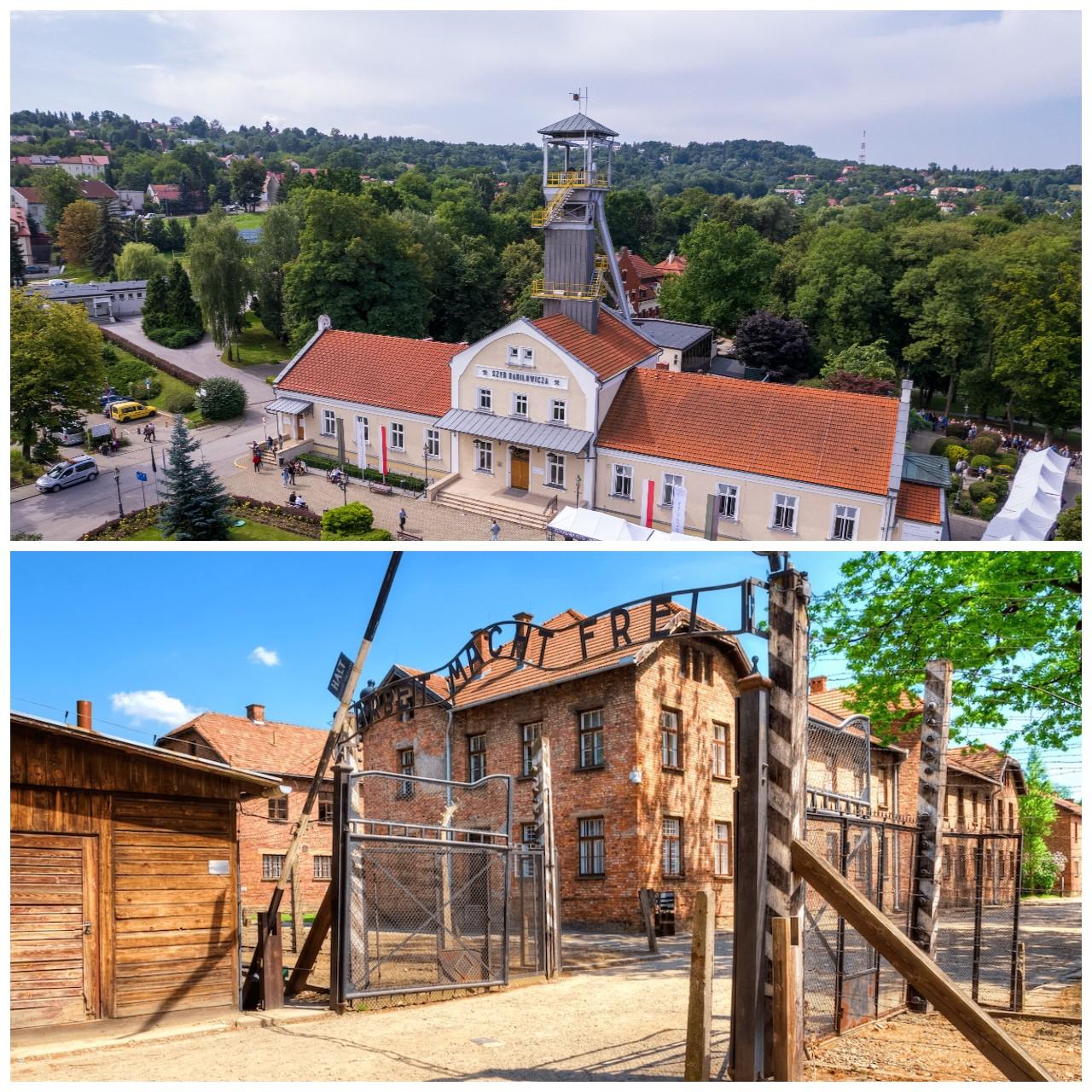
They complement each other; most visitors who do both call the Wieliczka Salt Mine the more physically engaging experience, whereas an auschwits tour from krakow tomorrow offers a somber, historically essential encounter.
|
Top pick Auschwitz-Birkenau |
Wieliczka Salt Mine | |
|---|---|---|
| Focus | Holocaust Memorial | Underground Engineering |
| Duration | 3.5–7 hours | 2.5–3 hours |
| Physical Effort | Extensive walking | 800 steps + walking |
| Temperature | Outdoor (varies) | Constant 14°C–16°C |
| Booking | Mandatory online pass | Licensed guide required |
| Best arrival | 07:30–09:00 | Morning (off-peak) |
| See tickets & prices |
Verdict: Choose the memorial for deep historical reflection or the salt mine for a unique subterranean exploration, and ensure you secure your auschwitz tour from krakow tomorrow tickets well in advance to accommodate limited capacity.
Hand-picked experiences loved by thousands of travelers
7 hours
Free Cancellation
Visit the Auschwitz-Birkenau Memorial with expert commentary, round-trip transport, and skip-the-line access
6 hours 30 minutes
Free Cancellation
Explore the UNESCO memorial site with a licensed guide on this profoundly moving historical journey
6 hours 30 minutes
Journey from Krakow to witness the sobering history of the Holocaust's largest concentration camp complex
7 hours
Free Cancellation
Intimate 15-person guided visit to the UNESCO-listed memorial and former Nazi camp complex
7 hours
Free Cancellation
Journey to the former Nazi concentration camps with expert commentary on this sobering historical excursion
11 hours
Free Cancellation
Journey through Poland's most profound historical sites in a single day with expert guidance
7 hours
Explore the history of the Holocaust at Auschwitz-Birkenau with expert guides and comfortable transport
Arrive at Więźniów Oświęcimia 55 for security checks.
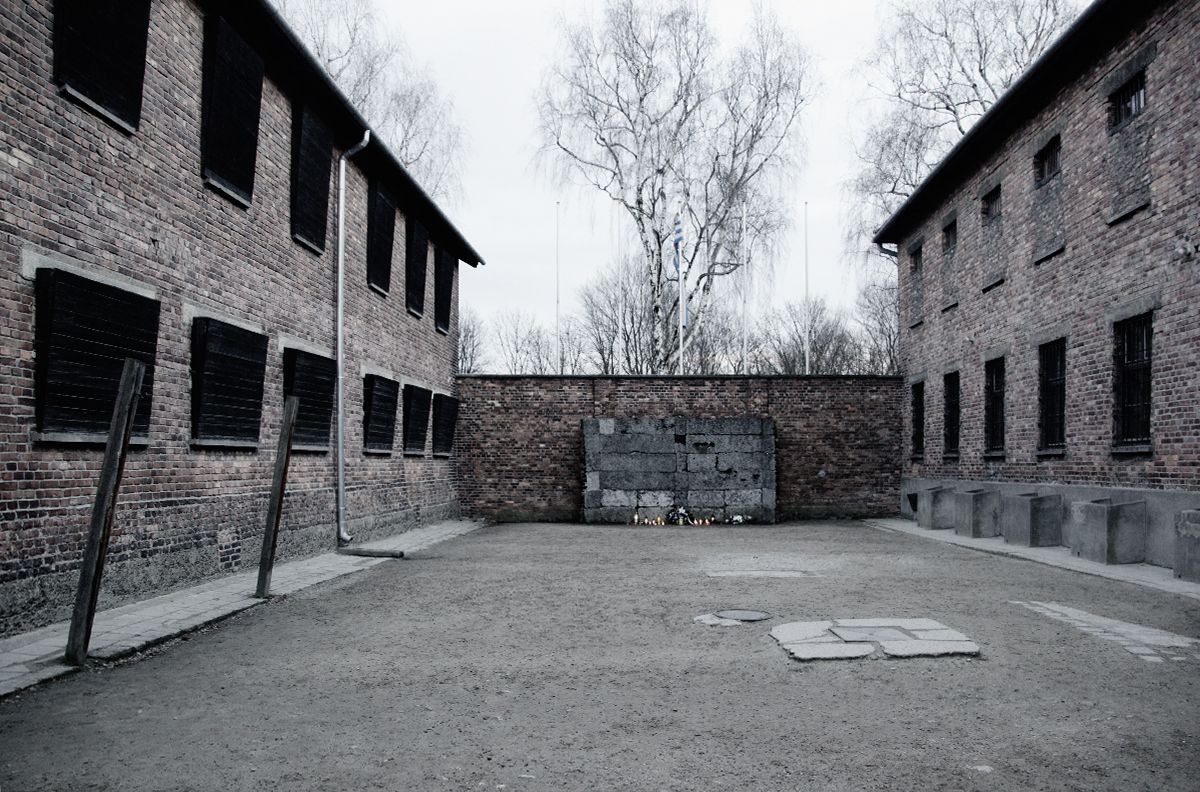
Explore the main camp including Block 11 and the Wall of Death.
Shuttle to the second camp site.
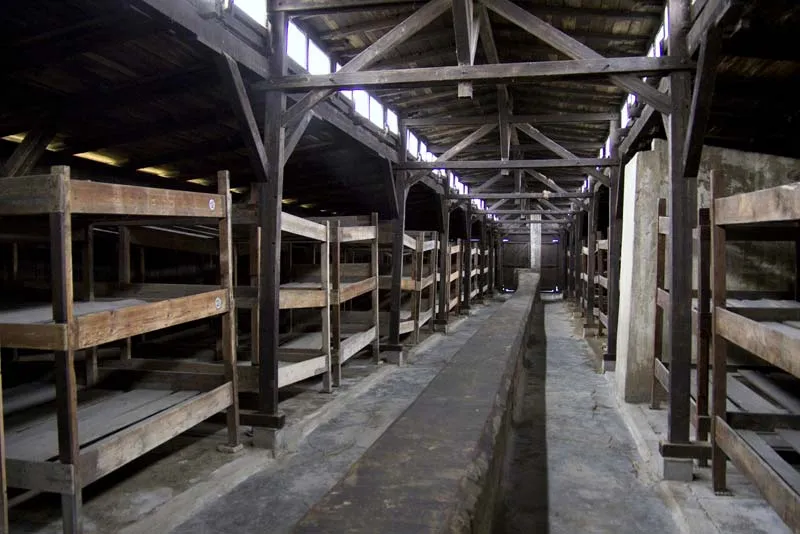
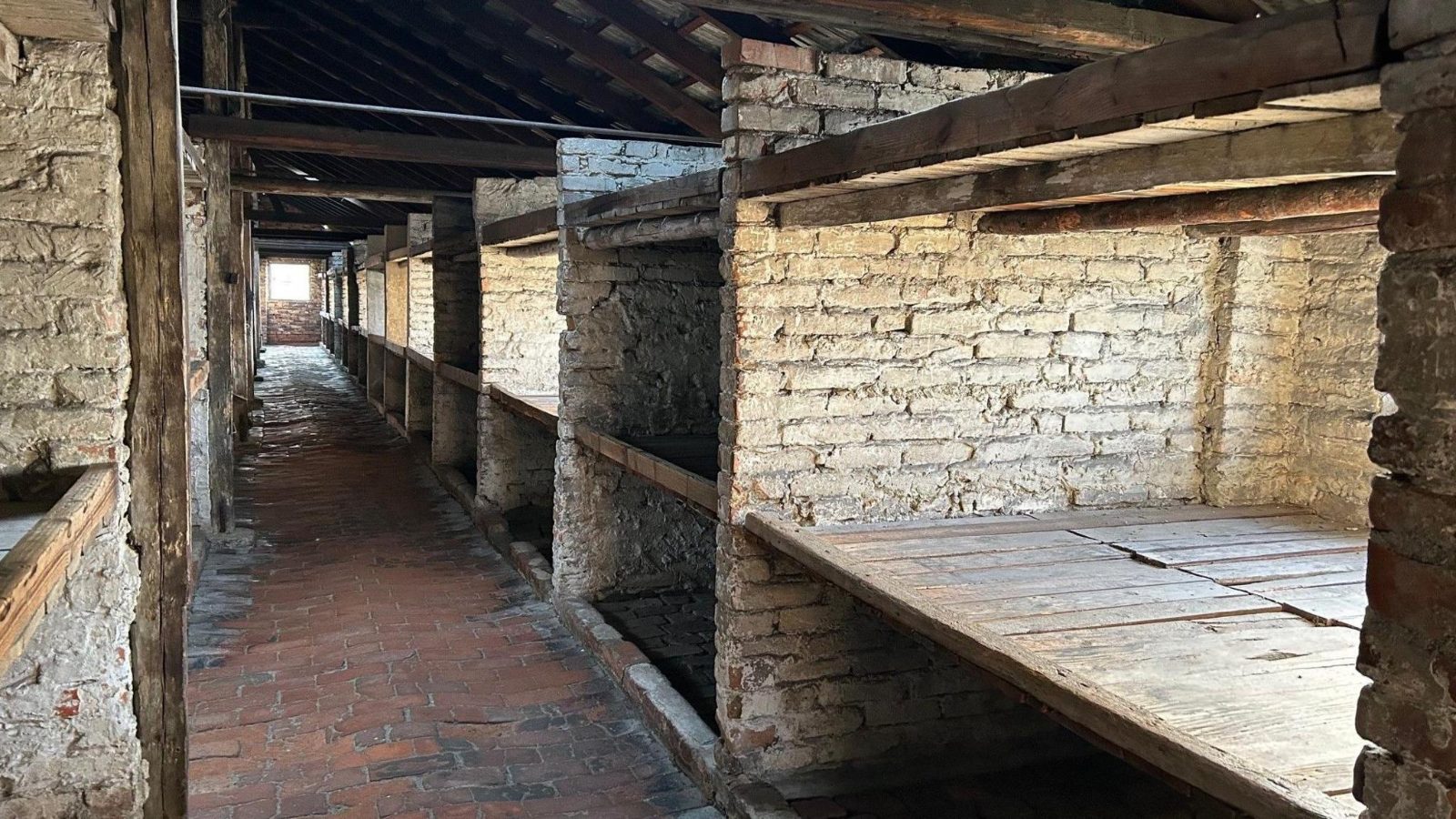
Tour the extensive grounds, train tracks, and remaining barracks.
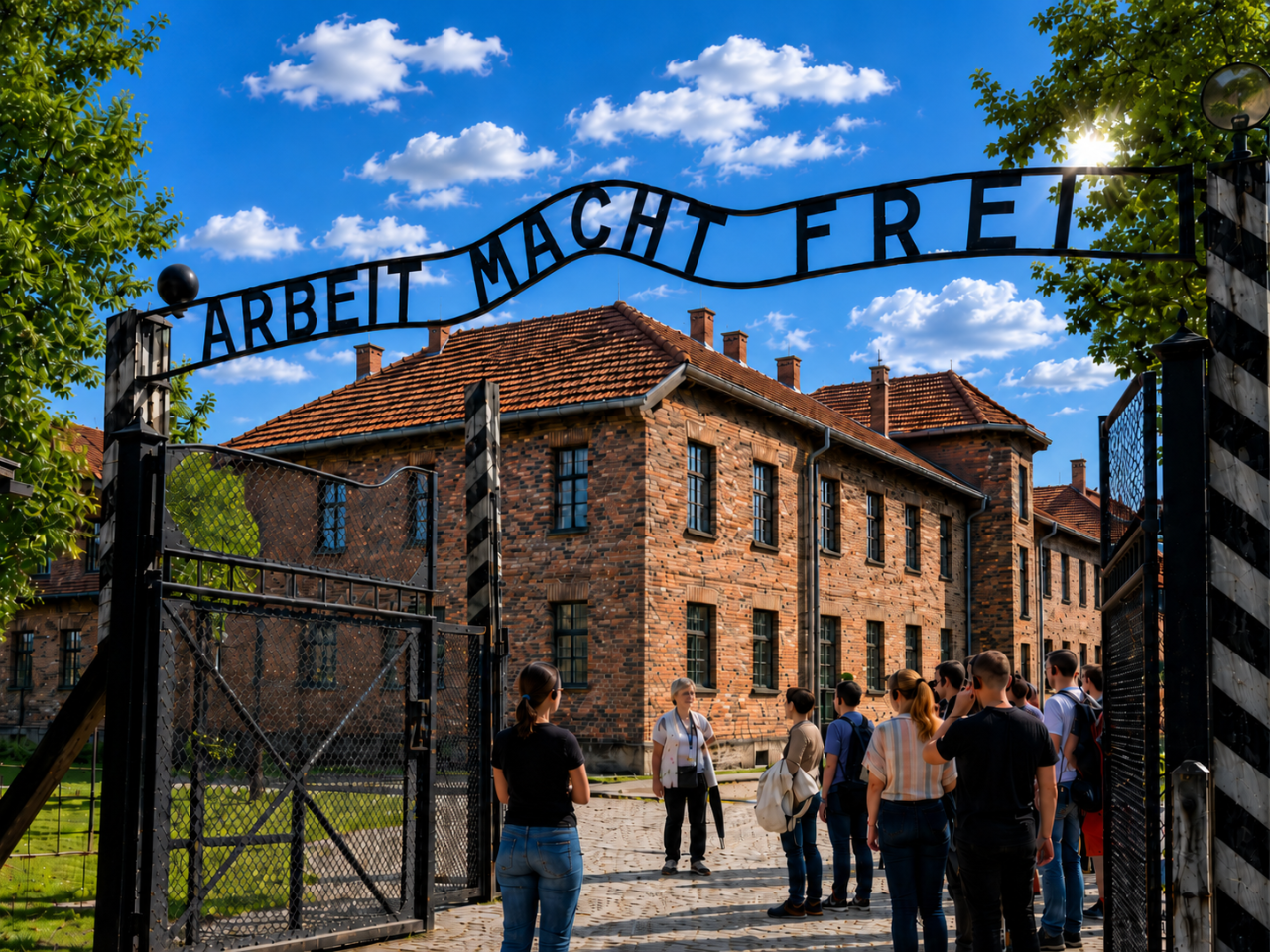
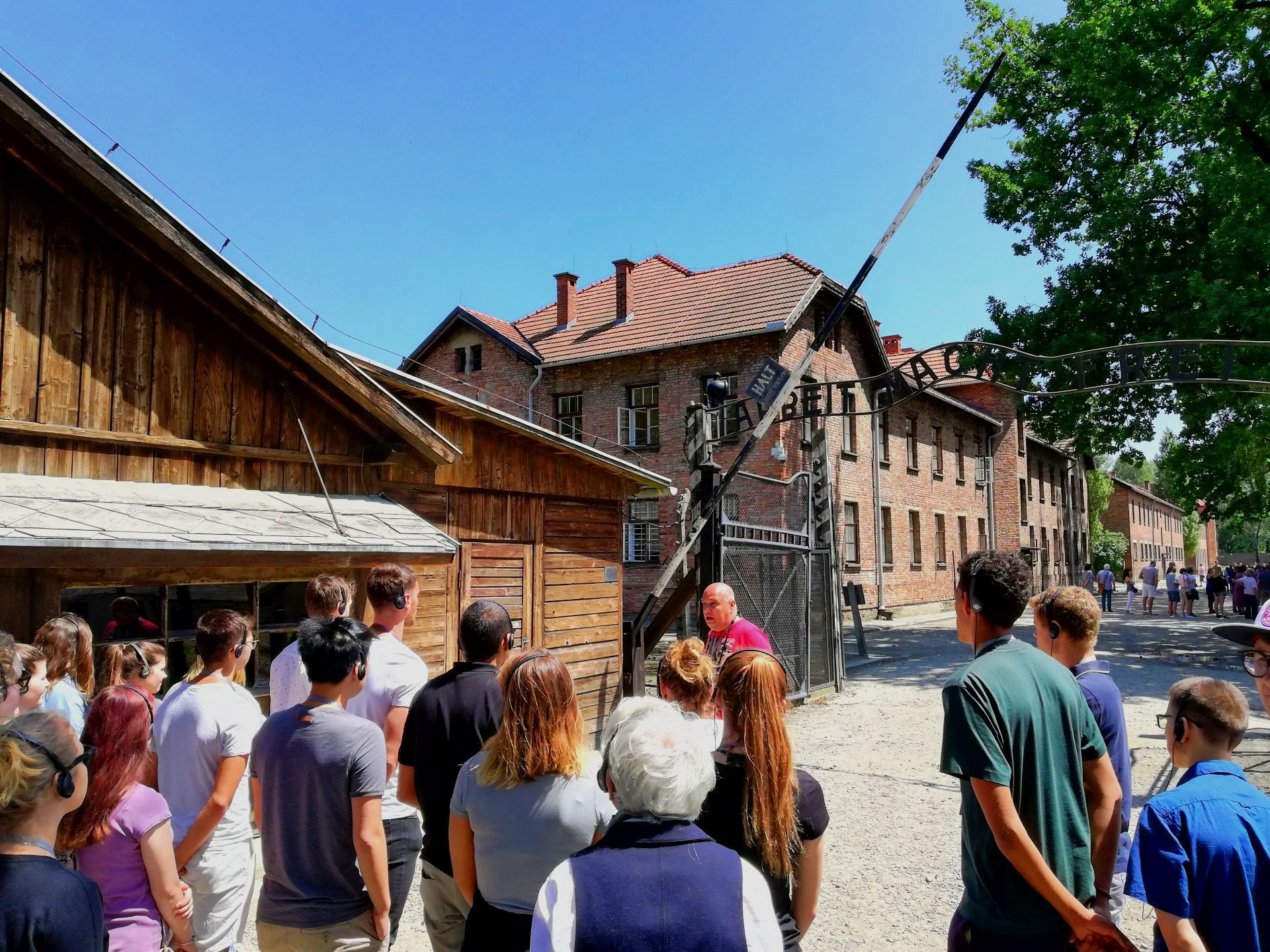
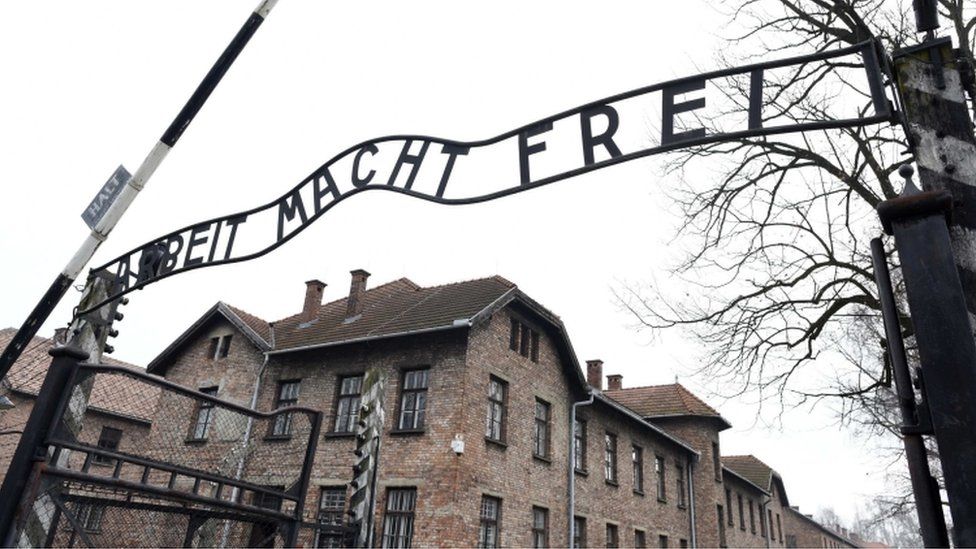
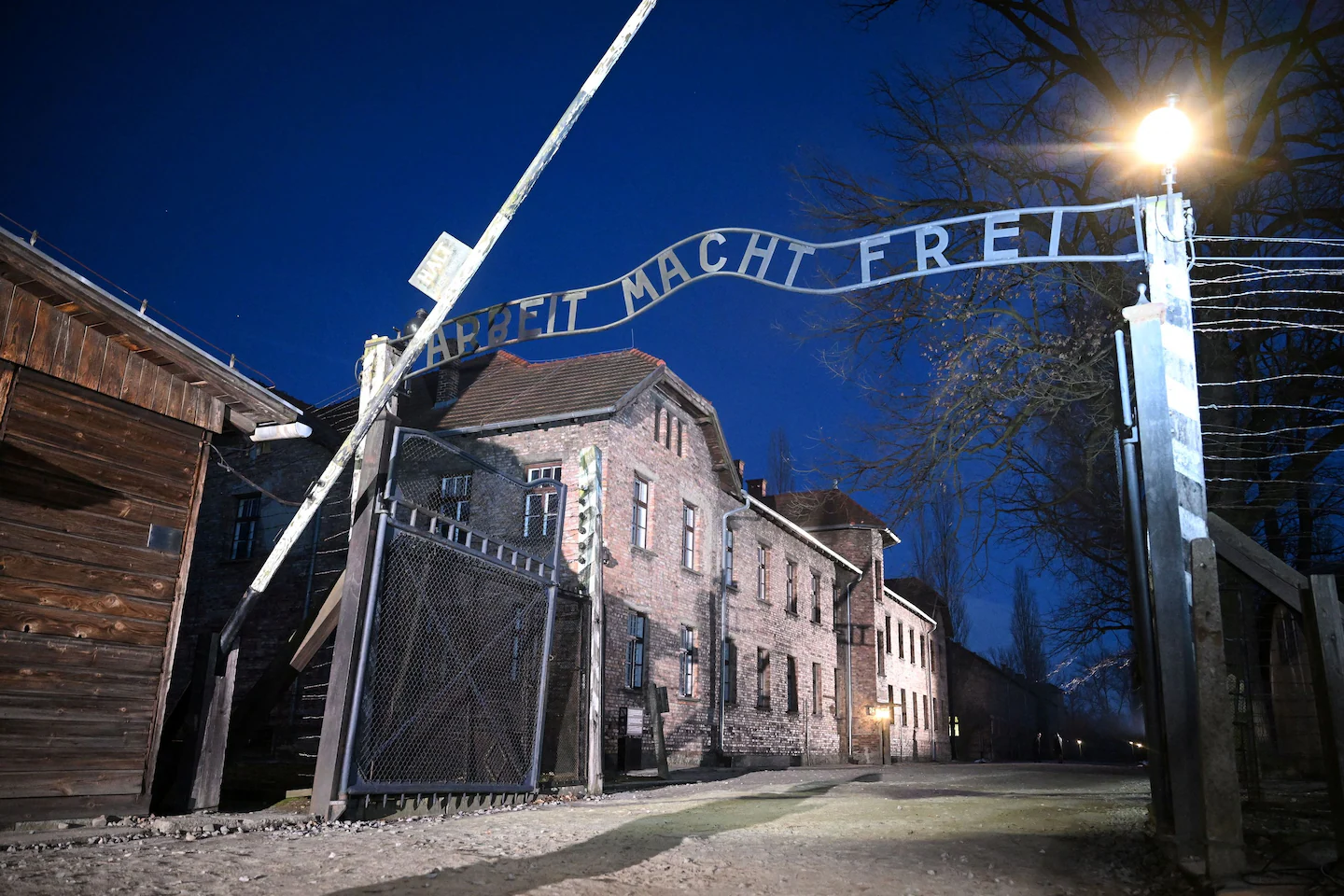
The infamous entrance gate featuring the German slogan known worldwide.
Known as the Death Block, this building holds great historical gravity.
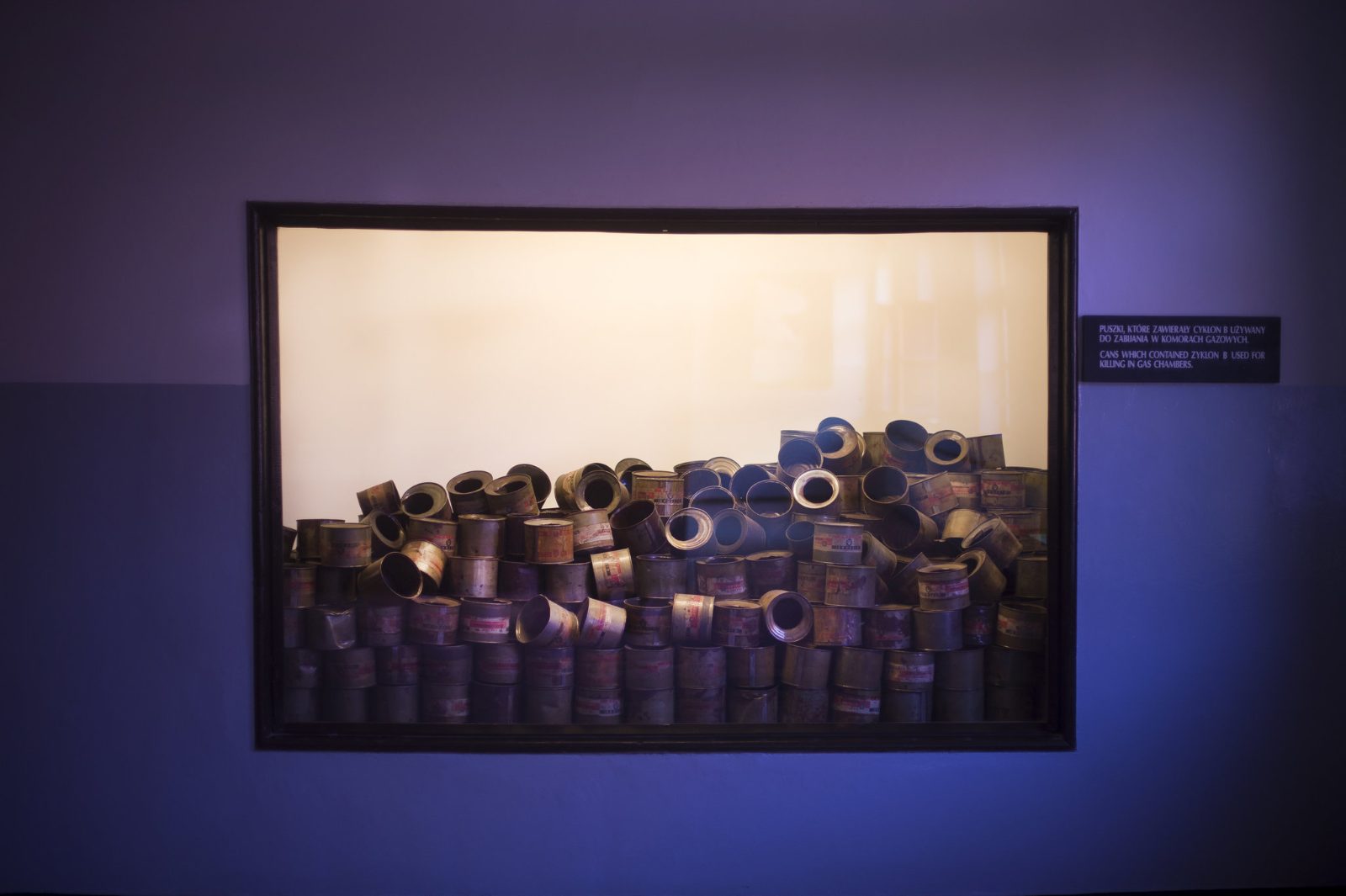
A profound exhibition space where photography is strictly prohibited.
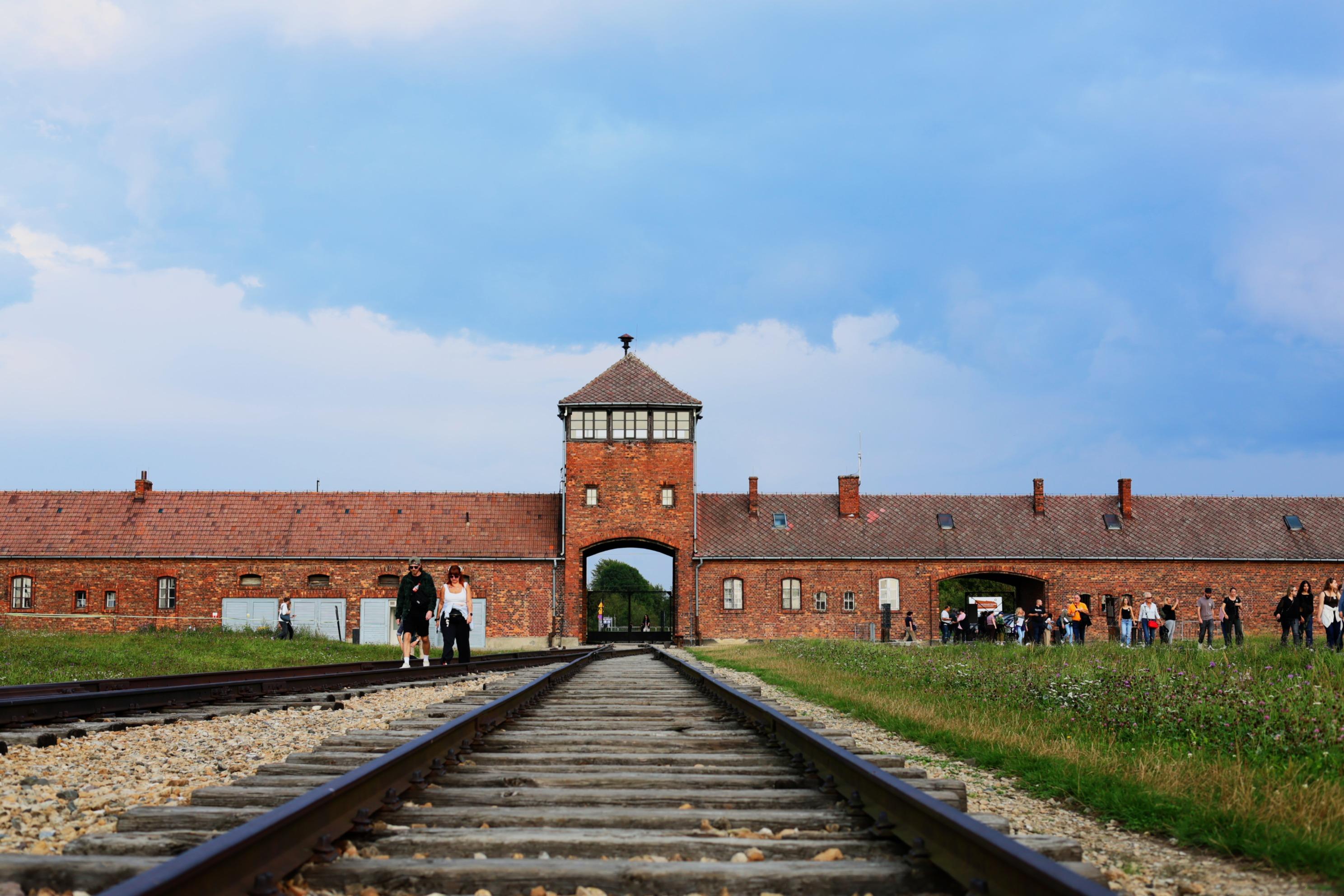
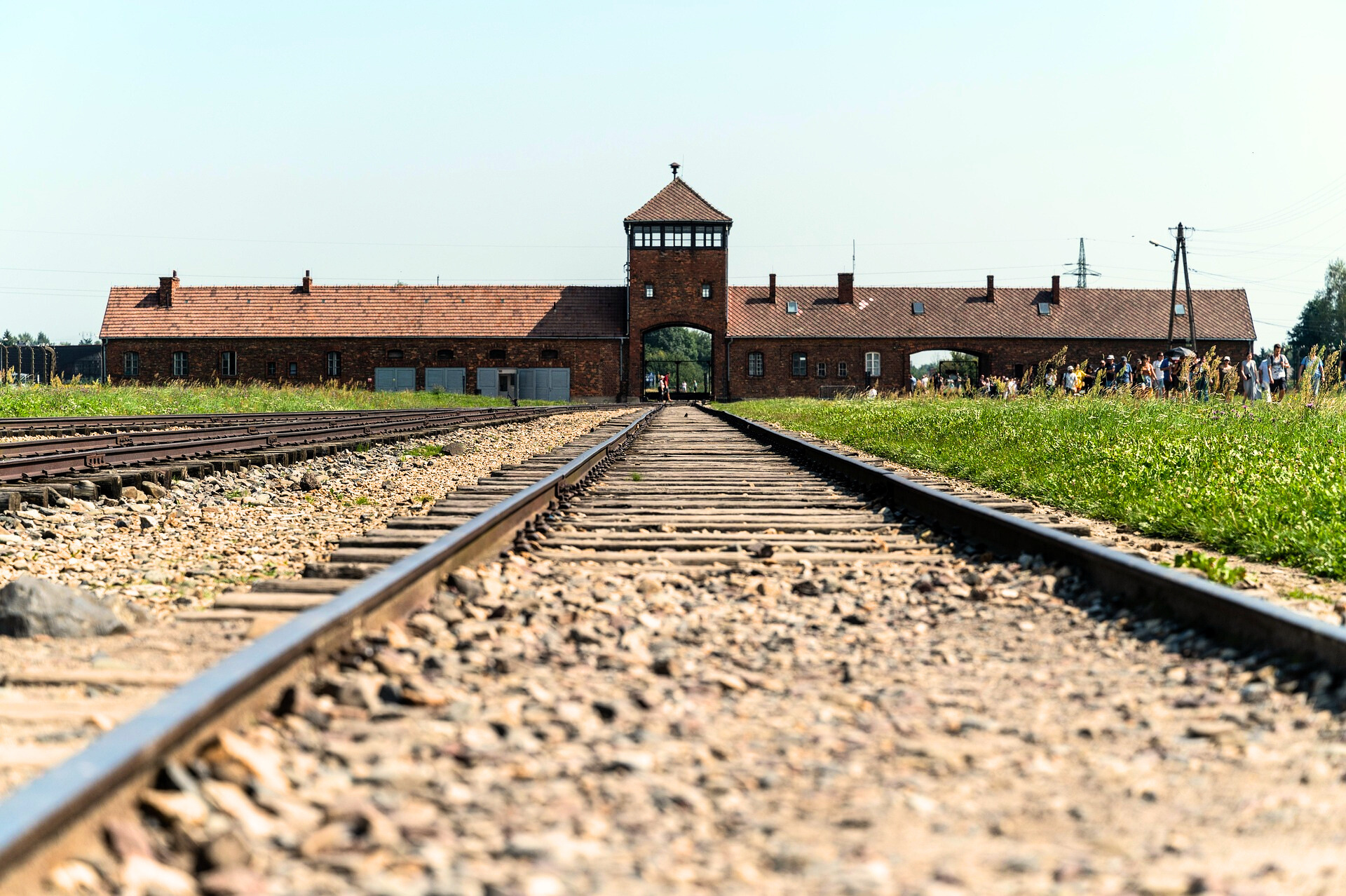
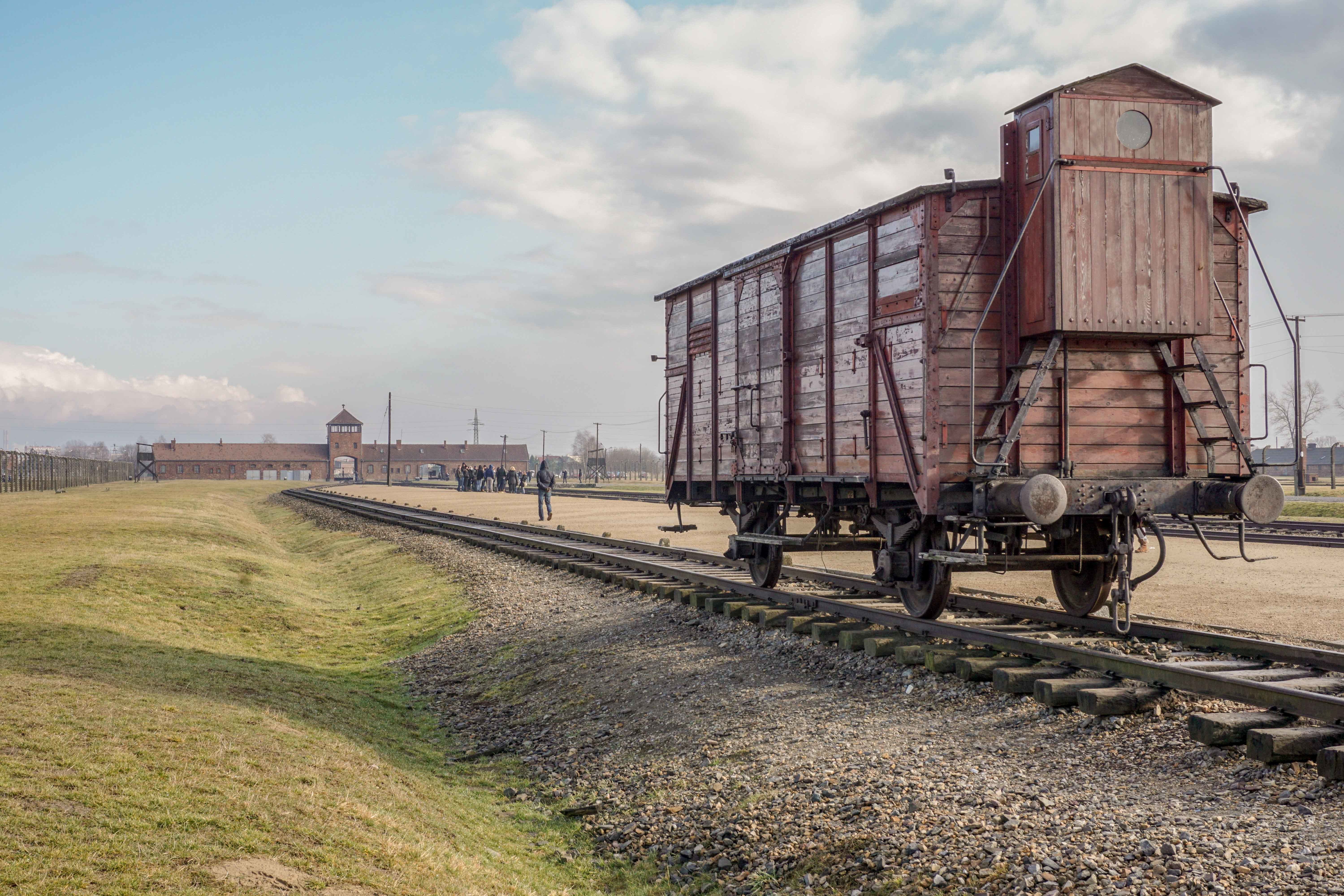
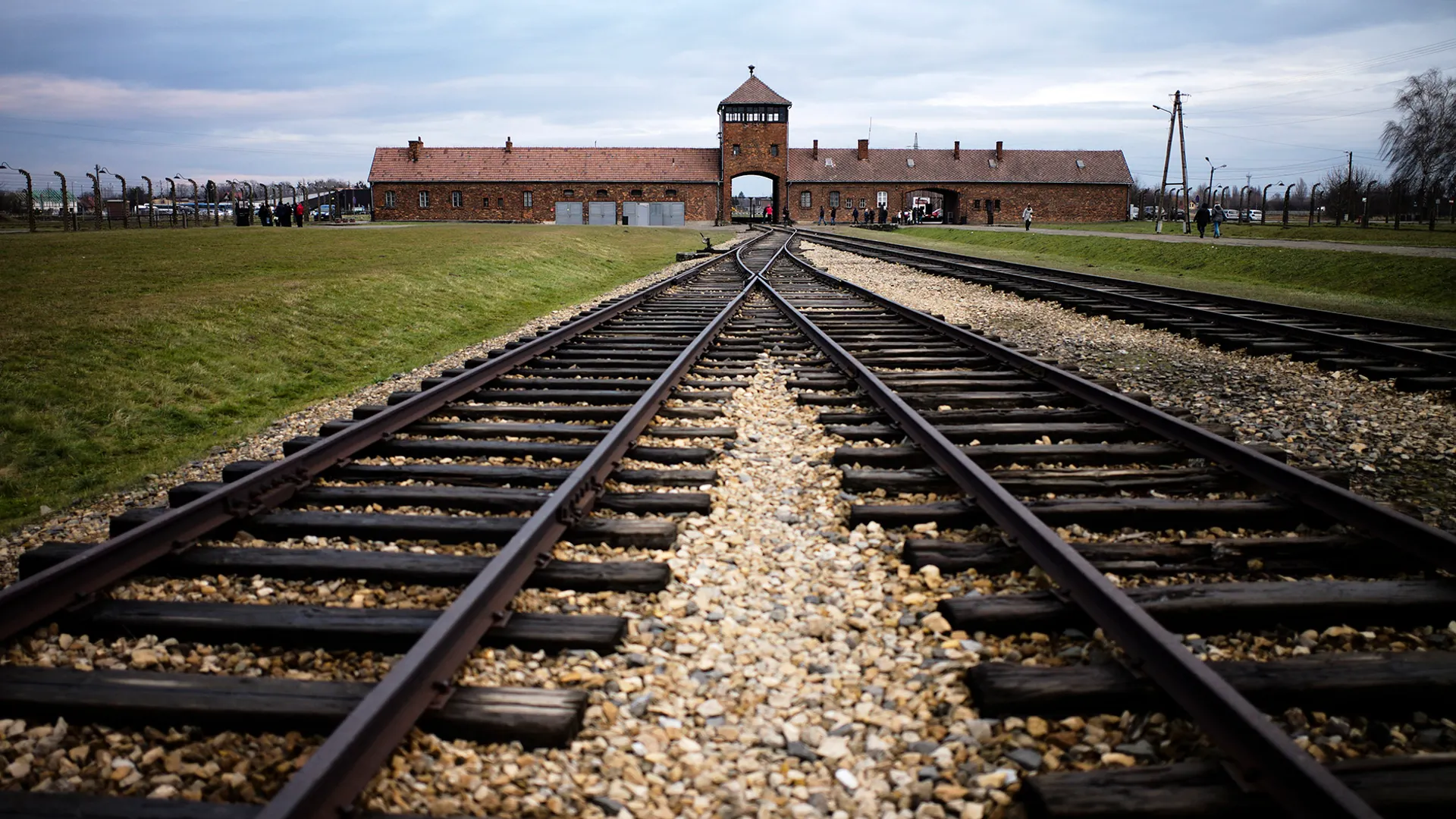
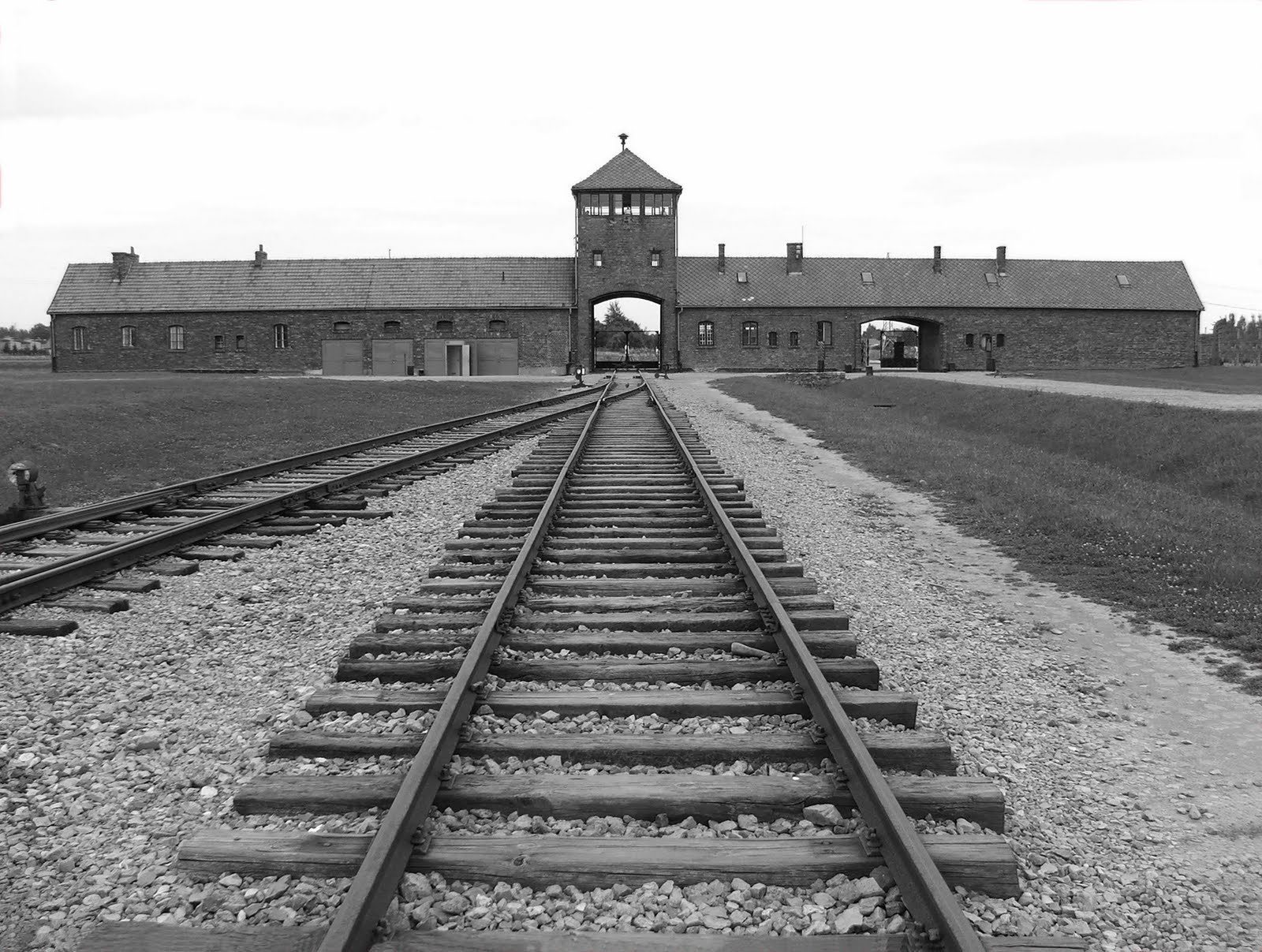
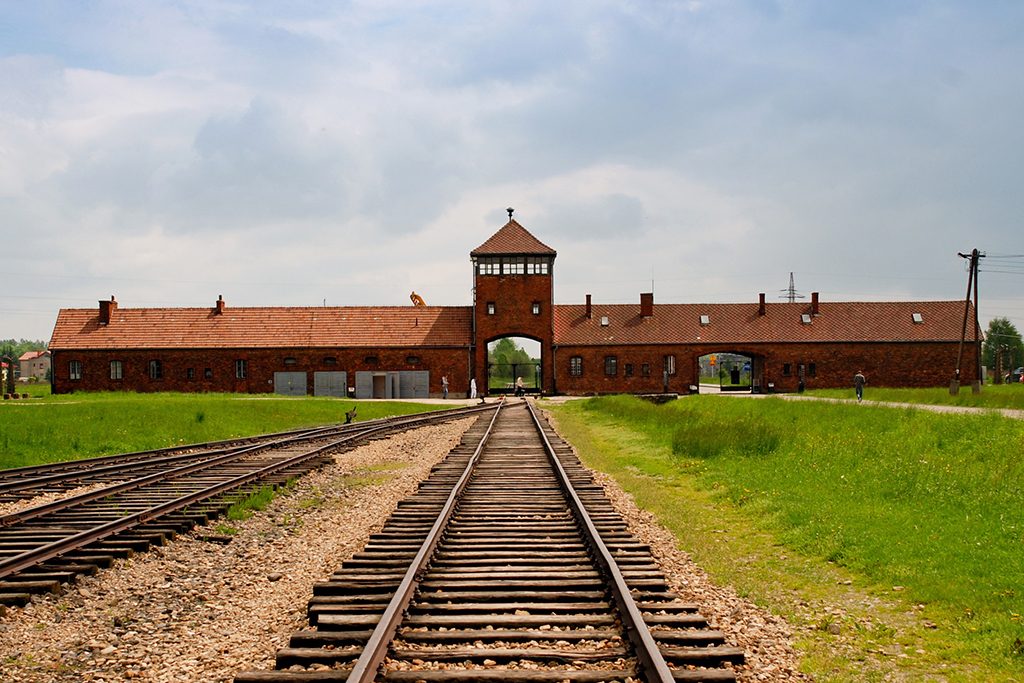
The historic arrival point for prisoners at the Birkenau site.
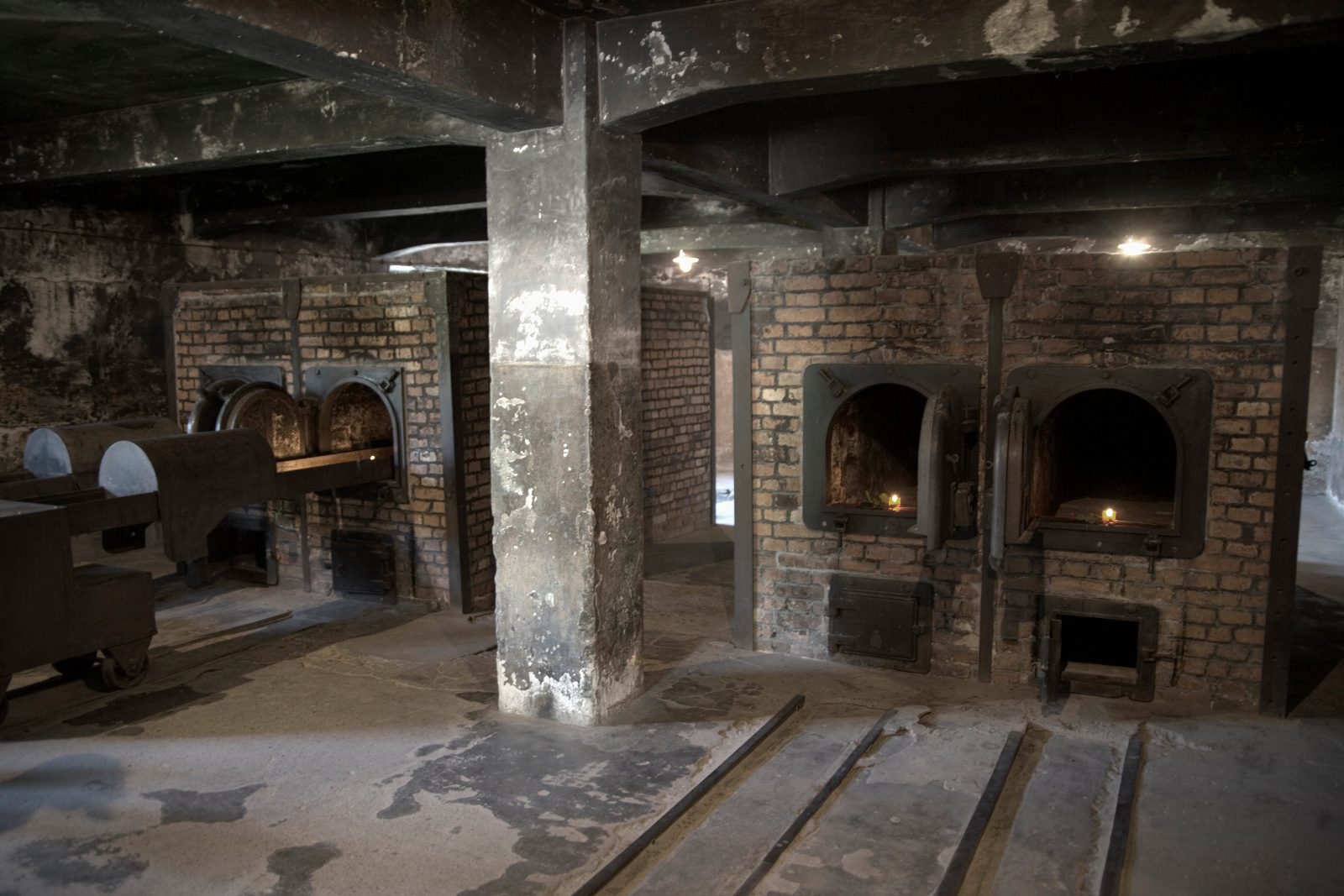
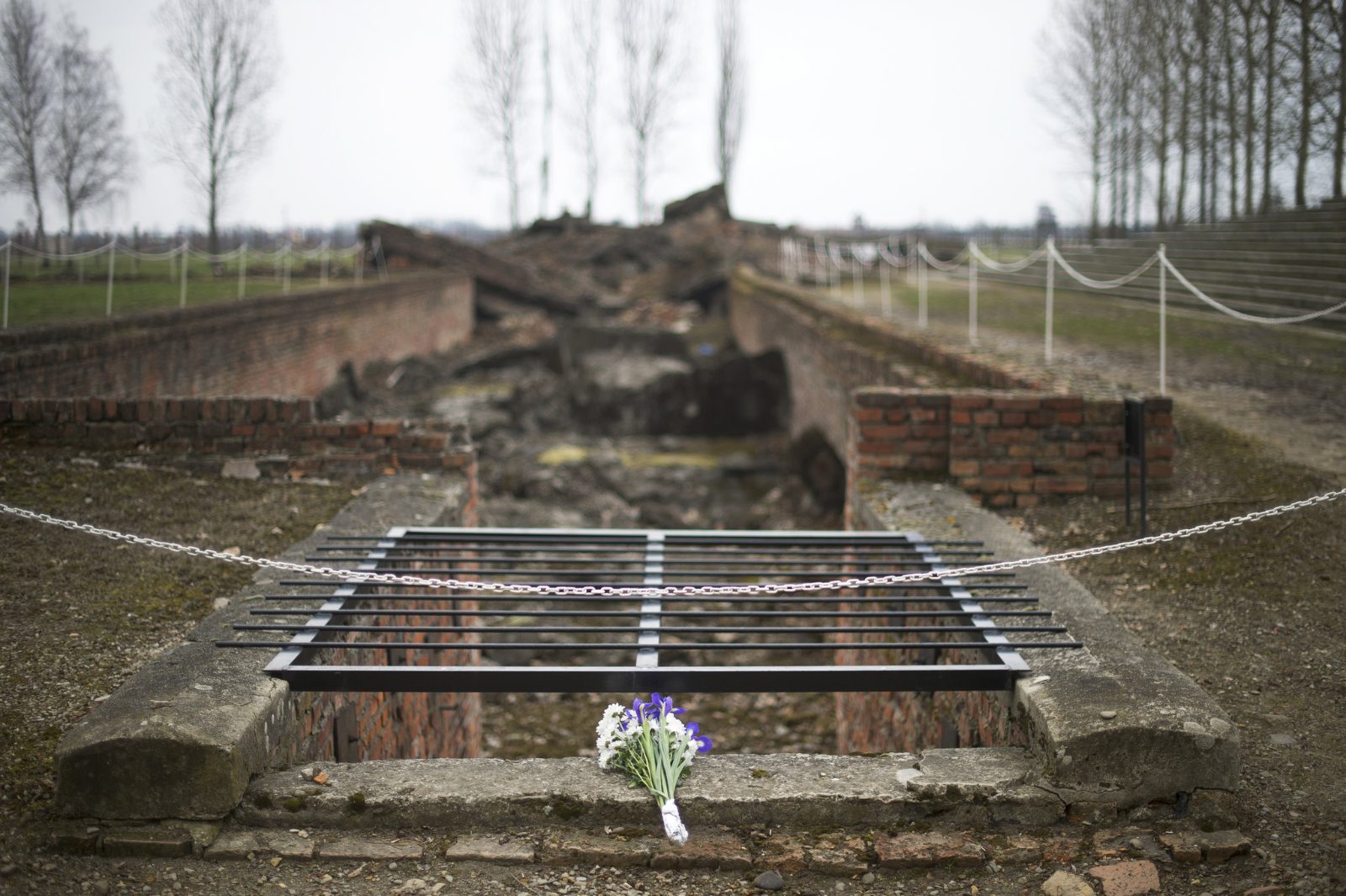
The remnants of the destruction at the Auschwitz II-Birkenau site.
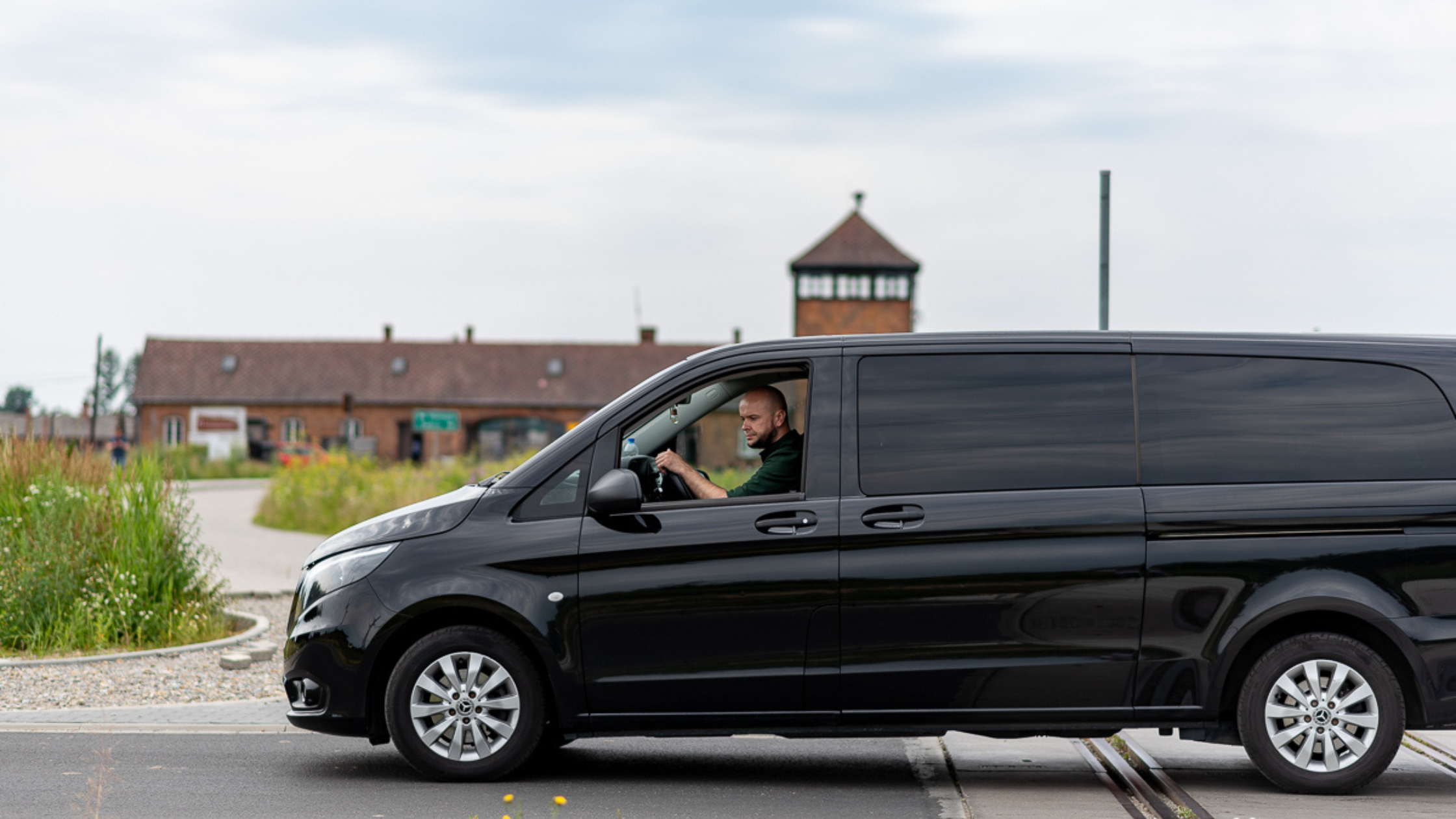
You meet your guide in central Krakow at 06:45, joining a small group of twelve to fifteen visitors for the seventy-minute westward drive. The van crosses the Vistula River and follows the A4 motorway through industrial suburbs before reaching Oświęcim just after 08:00.
At the memorial entrance, your reserved pass clears security without queue delays—bag checks and metal detectors are standard protocol.
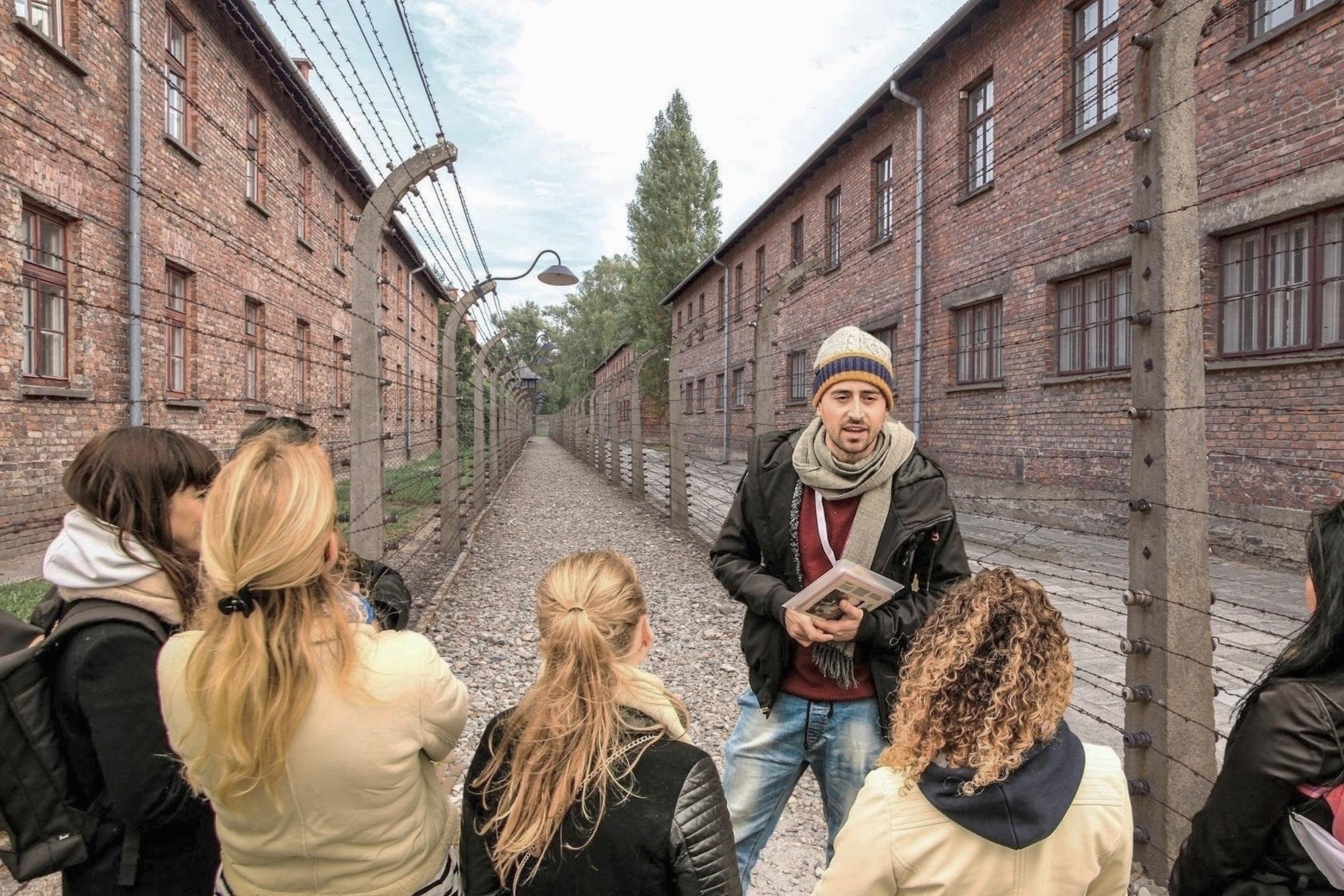
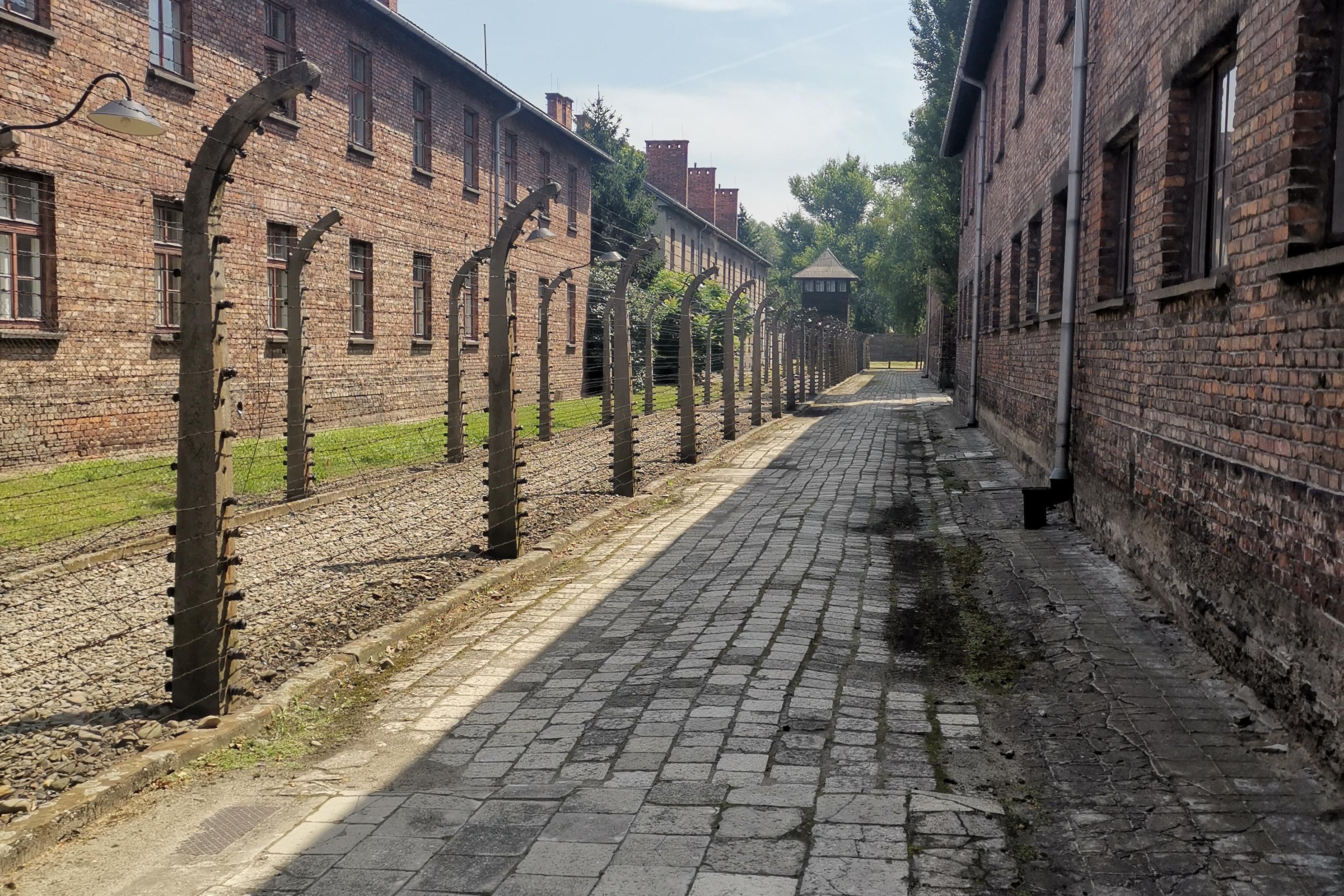
You enter Auschwitz I beneath the wrought-iron gate inscribed Arbeit Macht Frei, passing between double rows of electrified barbed-wire fence. Your guide walks you through Block 4, where hair, shoes, and prosthetic limbs are displayed behind glass—material evidence of the camp's function. You move into Birkenau's vastness after ninety minutes: the railway platform stretches toward the brick guard tower, and wooden barracks recede in geometric rows across flat ground. The ruins of Crematoria II and III stand at the complex's western edge, dynamited by retreating SS forces in January 1945. The tour concludes at the International Monument, where twenty languages bear witness in stone. You return to Krakow by 14:30, the afternoon light softening the city's spires after the morning's reckoning.
All the details about your upcoming adventure in one place
Between 1940 and 1945, more than 1.1 million people were murdered at Auschwitz-Birkenau, making it the largest and most systematic killing center of the Nazi regime.
The site now preserves two main sections across 191 hectares: Auschwitz I, the original concentration camp established in repurposed Polish army barracks, and Auschwitz II-Birkenau, the purpose-built extermination complex two kilometers west where the majority of deportees were murdered within hours of arrival. The brick barracks, railway spur, selection ramp, and ruins of gas chambers remain as forensic evidence of the Holocaust's industrial scale.
In 1947, the Polish parliament established the State Museum at Auschwitz-Birkenau, and UNESCO inscribed it as a World Heritage Site in 1979. More than two million visitors now walk its grounds annually. The Auschwitz tour from Krakow tomorrow options include hotel pickup, ensuring efficient access to the memorial's morning hours when groups are smaller and the weight of the site settles more palpably. Guides certified by the museum provide historical context that the physical remnants alone cannot convey—explaining the bureaucratic machinery behind deportations, the architecture of terror in camp design, and the individual stories archived in the museum's documentation center.
The permanent exhibitions inside Block 4 (extermination evidence), Block 5 (material traces of victims), and Block 11 (the camp prison) hold artifacts recovered from the site: suitcases labeled with names and addresses, children's shoes, thousands of pounds of human hair sheared for textile manufacture. The national exhibitions contributed by Poland, Israel, France, and twelve other countries occupy additional barracks, each interpreting the camp's history through the lens of their own deported populations. At Birkenau, the International Monument stands at the end of the railway platform where Josef Mengele conducted selections—a 1967 modernist structure designed by Italian survivors Primo Levi and Giorgio Montalcini.
Visitors booking auschwitz tour from krakow tomorrow tours receive a personalized entry pass, mandatory for all visitors since 2023 when the museum implemented reservation controls to manage site preservation and visitor flow. The seventy-minute drive from Krakow's Old Town passes through the Silesian countryside before reaching Oświęcim, the town's Polish name obscured by German occupation renaming. The memorial opens at 07:30, and morning arrivals benefit from quieter conditions and more direct engagement with the site's testimonial function.
More than 1.1 million people were murdered at Auschwitz-Birkenau between 1940 and 1945, making it the largest killing center of the Nazi regime.
Dress respectfully as you would for a funeral, ensuring shoulders and knees are covered. Avoid bright colors, offensive slogans, or inappropriate imagery.
Bags exceeding 30x20x10 cm are prohibited and must be left in the visitor center lockers or your vehicle. Expect airport-style security screening upon entry.
Non-commercial photography is permitted outdoors and in most exhibitions. It is strictly forbidden in the Victims' hair room (Block 4) and the basements of Block 11.
A visit is not recommended for children under 14 due to the somber nature of the site. Minors must be accompanied by an adult.
The Visitors' Service Centre is fully accessible with ramps and floor paths for the visually impaired. Wheelchairs and walkers are available for loan upon prior request.
Eating and drinking are strictly forbidden inside exhibition buildings. Consume food only in designated outdoor areas or prior to entering security.
Opening hours
07:30–18:00
Address
Więźniów Oświęcimia 55, 32-600 Oświęcim, Poland
Accessibility
Wheelchairs available for loan; notify in advance.
Best arrival window
07:30–09:00 — Arrive early to avoid peak crowds.
Storage
Left in vehicles or facility lockers.
Train · 2 hrs · Low
Regional services connect Krakow and Katowice to Oświęcim station.
Bus · 1 hr 30 min · Low
Frequent connections exist from central Krakow bus stations.
Entry passes are personalized and non-transferable. Refer to the specific operator policy for any purchased guided tours.
Recommended time
6-8 hours
Planning an auschwitz tour from Krakow tomorrow requires accounting for both the main camp and the Birkenau site, which are connected by a shuttle service. Visitors should arrive early to avoid peak crowds and ensure sufficient time for security checks. Your Krakow Auschwitz tour experience generally spans a full day including the transit time from the city, so allocate extra time for the transition between sites to ensure a meaningful visit to this UNESCO heritage landmark. Secure your auschwitz tour from Krakow tomorrow tickets well in advance, and note that the best arrival window is 07:30–09:00.
Crowd levels through the day
Weather · crowds · average price — dots go green to amber to red as each metric rises.
Mild temperatures; ideal for walking between sites.
High crowd density; carry water and sun protection.
Cooler, comfortable weather; slightly fewer visitors.
Cold temperatures; dress warmly for outdoor sections.
Reserve your pass 90 days in advance to secure a spot for an auschwitz tour from krakow tomorrow.
Ensure the name on your booking matches your ID exactly.
Respect the solemnity of the grounds at all times.
Be prepared for exposed walking areas with little shelter.
Utilize the provided lockers for any bag exceeding the limit.
Więźniów Oświęcimia 55, 32-600 Oświęcim
Main entrance for tours.
Get directionsAuschwitz-Birkenau began as a Polish army barracks in the town of Oświęcim before the German occupation transformed it into the largest complex of concentration and extermination camps in Nazi-controlled Europe. In April 1940, the SS requisitioned the site to hold Polish political prisoners. Rudolf Höss became the first commandant, overseeing the conversion of twenty former artillery buildings into a detention facility. By March 1941, Heinrich Himmler ordered the construction of a second camp at nearby Birkenau to accommodate tens of thousands of Soviet prisoners of war. The site expanded rapidly. Auschwitz II-Birkenau became the principal killing center, equipped with four gas chamber and crematorium complexes by mid-1943. The Nazis deported Jews from across occupied Europe—Hungary, Poland, France, the Netherlands, Greece, and beyond—using railway infrastructure that delivered victims directly to the Birkenau ramp. SS physicians conducted selections immediately upon arrival, sending the majority to the gas chambers within hours. An estimated 1.1 million people were murdered at Auschwitz between 1940 and 1945, approximately ninety percent of them Jewish. Smaller groups of Romani people, Soviet prisoners of war, and Polish political prisoners also perished there. The Red Army liberated the camp on January 27, 1945, finding roughly seven thousand surviving prisoners, most gravely ill. The SS had already demolished the crematoria and evacuated tens of thousands of inmates westward in death marches. In 1947, the Polish parliament established the Auschwitz-Birkenau State Museum on the grounds of the former camps. Preservation work began immediately to stabilize the remaining structures—barracks, watchtowers, and the ruins of the gas chambers at Birkenau. UNESCO inscribed the site on the World Heritage List in 1979, recognizing it as evidence of the Holocaust and a symbol of humanity's capacity for systematic cruelty. Today the museum archives hold nearly four thousand SS construction plans, prisoner registration records, and clandestine photographs taken by members of the Sonderkommando. Those planning an auschwitz tour from krakow tomorrow will encounter these preserved remnants directly, walking the same railway platform where arriving deportees faced selection and entering barracks that held thousands in conditions designed to destroy human dignity.
The SS establishes Auschwitz I in a former Polish military barracks to detain political prisoners.
Construction begins on Auschwitz II-Birkenau, designed to hold Soviet POWs and later serve as the main extermination center.
The first transports of Jews from Slovakia and France arrive at Auschwitz; systematic mass murder using Zyklon B begins.
Four gas chamber and crematorium complexes become operational at Birkenau; the camp reaches peak killing capacity with transports from Hungary in summer 1944.
Soviet forces liberate Auschwitz on January 27, discovering approximately 7,000 surviving prisoners and extensive evidence of Nazi crimes.
The Polish parliament passes legislation creating the Auschwitz-Birkenau State Museum to preserve the site as a memorial and educational center.
UNESCO designates Auschwitz-Birkenau a World Heritage Site, the first memorial site inscribed on the list.
The museum continues preservation work and hosts over two million visitors annually, maintaining original structures and archival collections for historical research.
Stand directly in front of the main entrance gate to capture the iconic wrought-iron inscription. Position yourself centered to ensure symmetrical lines, though be mindful of other visitors when planning your auschwitz tour from krakow tomorrow.
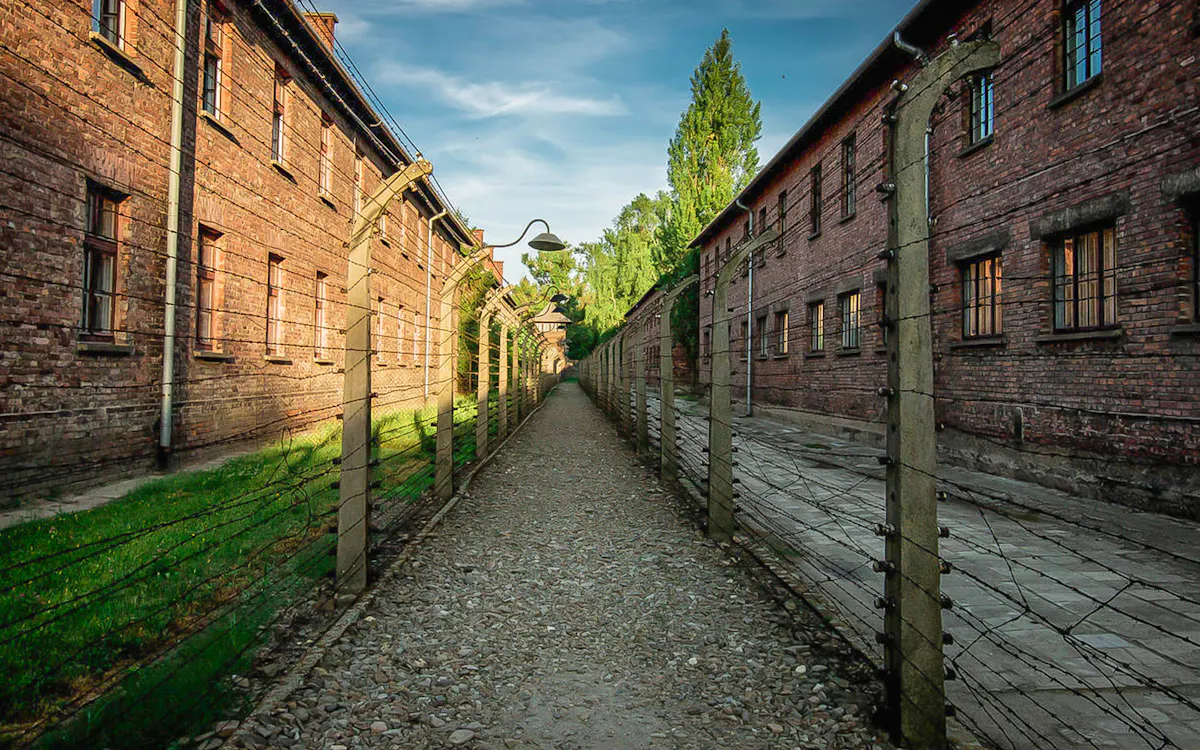
This quiet space offers a somber perspective of the brick barracks connected by gravel paths. Use the leading lines of the buildings to create a sense of scale and historical context for your Auschwitz-Birkenau landmark photography.
Position your camera at the entrance of the main gate house looking down the iconic railway tracks that extend into the horizon. This location is essential for capturing the vastness of the site during your auschwitz tour from krakow tomorrow tours.
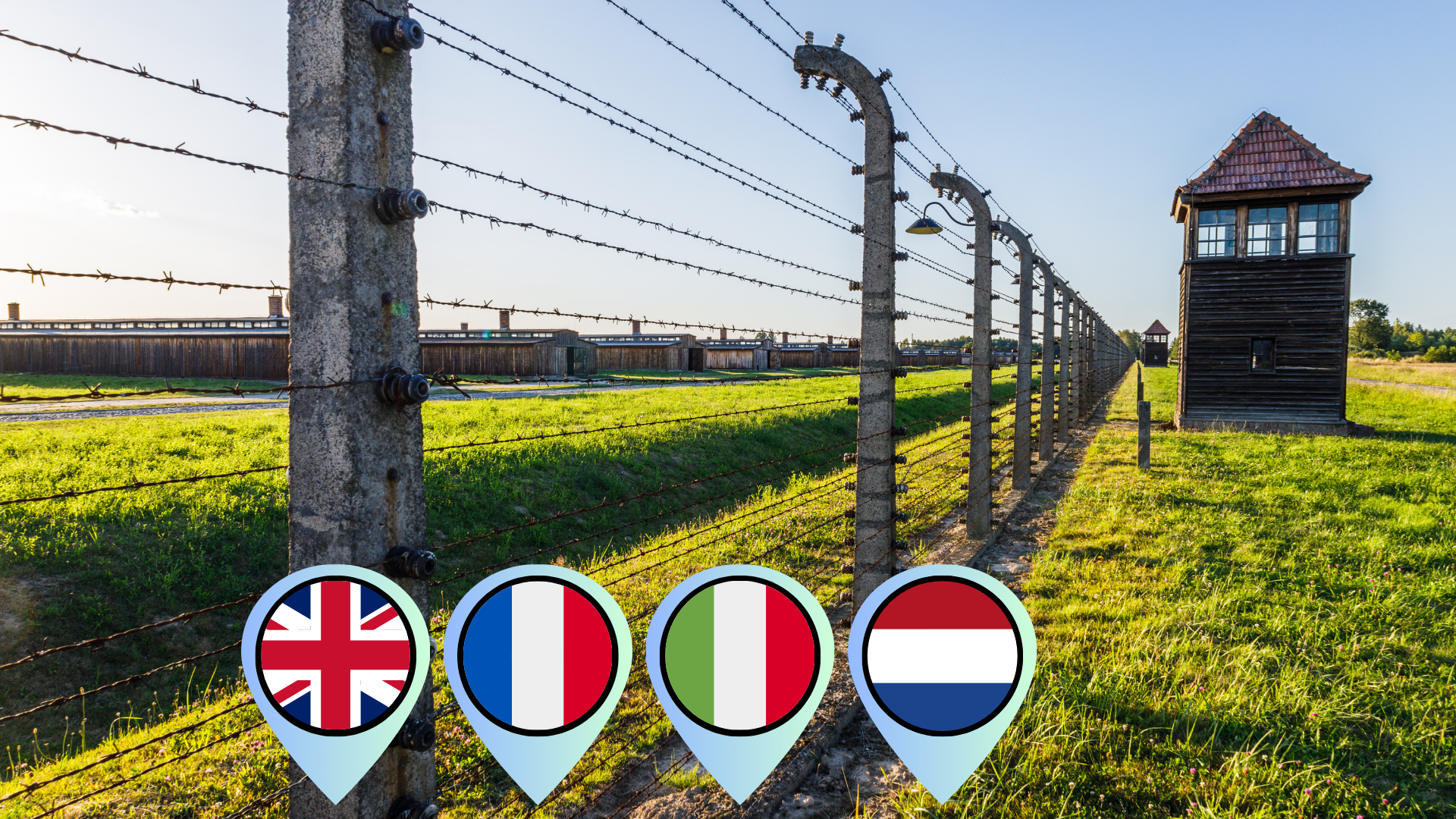
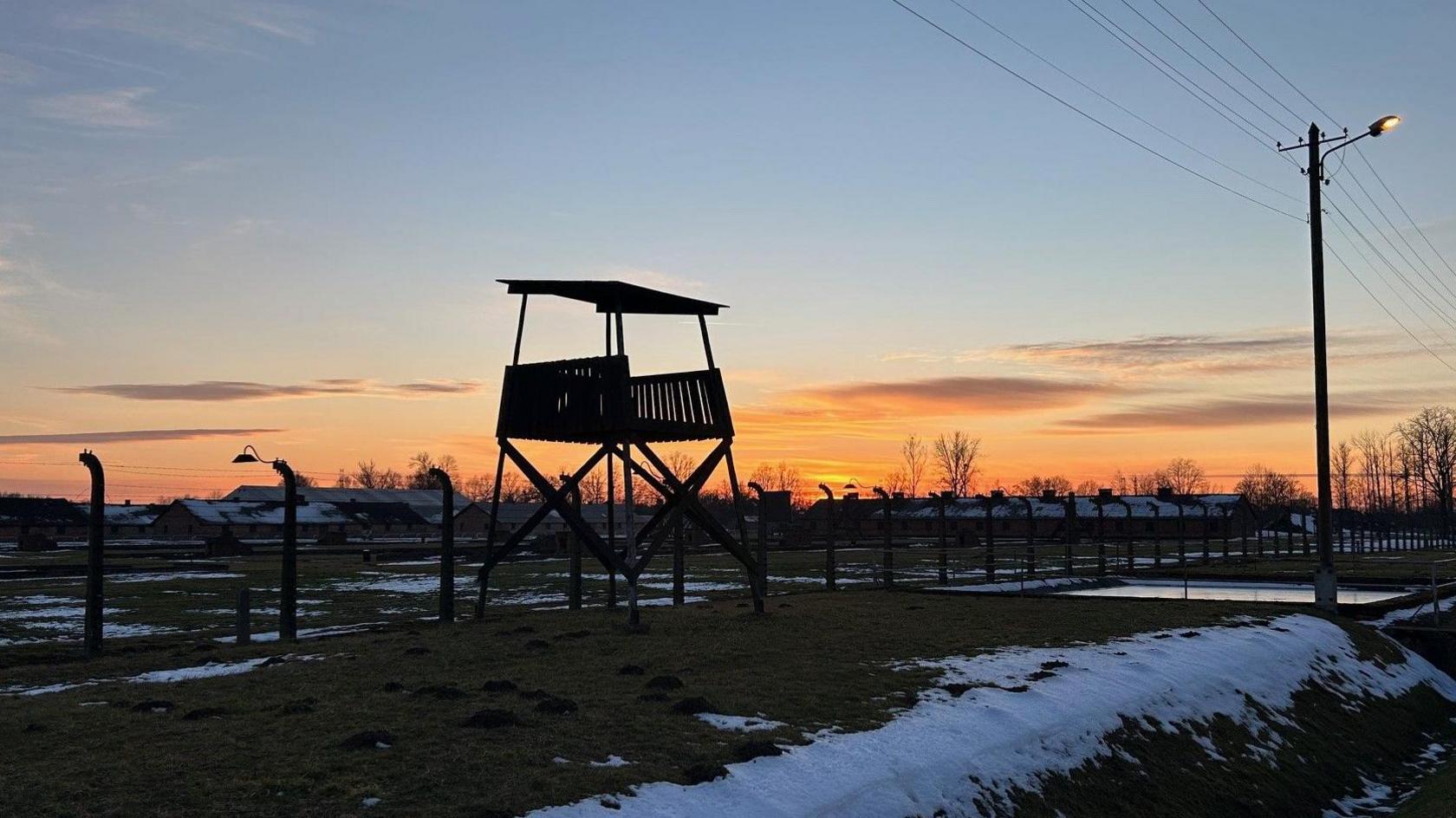
Find an angle from the perimeter path to frame the wooden guard towers against the sky. This provides a clear view of the complex's layout and the historical landscape for those seeking auschwitz tour from krakow tomorrow tickets.
Stand near the site of the former crematoria remains to capture the scale of the international monument. This area allows for respectful composition of the ruins and surrounding grounds during your auschwitz tour from krakow tomorrow tour.
Planning an auschwitz tour from krakow tomorrow requires careful consideration, as the site is a memorial space rather than a standard family destination. It is essential for parents to assess the emotional weight of the exhibits before booking your auschwitz tour from krakow tomorrow tickets.
Large prams are difficult to navigate on the uneven ground and gravel paths at the memorial, so a lightweight carrier is highly recommended for younger children.
The site does not strictly forbid children, but the museum recommends that visitors be at least 14 years old to fully process the historical context of these Krakow landmarks.
Changing stations and family-friendly amenities are limited, so ensure you have all necessary supplies before departing for your auschwitz tour from krakow tomorrow tours.
The site is extensive and requires significant walking; plan for frequent breaks to help younger visitors manage the physical requirements of the auschwitz tour from krakow tomorrow tour.
On-site dining options are minimal, so pack sufficient water and snacks for your group to avoid discomfort during the visit.
While there are no dining facilities inside the historic camp grounds, visitors can find basic refreshments and snacks at the entrance area of Auschwitz I or nearby in Oświęcim. Many guests on an auschwitz tour from krakow tomorrow prefer to bring light sustenance or dine in town before or after their visit to these important landmarks.
Popular for wood-fired pizzas and pasta; a convenient choice for those finishing their auschwitz tour from krakow tomorrow tours.
A rustic venue serving hearty local staples like pierogi and bigos, ideal for reflection after your auschwitz tour from krakow tomorrow trip.
A peaceful, reflective spot near the town center offering coffee, baked goods, and kosher snacks for guests with auschwitz tour from krakow tomorrow tickets.
Known for authentic home-cooked meals including potato pancakes and daily soups, providing a warm atmosphere after your tour.
Everything you need to know for your journey
Entry to the memorial is free, but you must reserve a personalized entry pass in advance at visit.auschwitz.org. Engaging an educator for an auschwitz tour from krakow tomorrow incurs a fee.
Due to high demand, spots for an auschwitz tour from krakow tomorrow often sell out; booking online well in advance is highly recommended.
For an auschwitz tour from krakow tomorrow, bags must not exceed 30x20x10 cm. Larger items must be left in lockers.
Visiting is not recommended for children under 14 during an auschwitz tour from krakow tomorrow.
Photography is allowed in most areas of an auschwitz tour from krakow tomorrow, excluding specific memorial rooms and basements.
An auschwitz tour from krakow tomorrow usually lasts about three-and-a-half hours for guided sessions.
You can tour independently if you have an entry pass, though an educator is recommended for an auschwitz tour from krakow tomorrow.
The site is equipped for mobility needs, and wheelchairs can be borrowed during your auschwitz tour from krakow tomorrow.
Food is prohibited inside exhibition buildings during your auschwitz tour from krakow tomorrow; keep it in your bag.
Medieval castle overlooking the town.
Historical site preserving local Jewish heritage.
Central gathering place in Oświęcim.
Educational and practical lodging for groups.
Located conveniently near the memorial.
Various options within Oświęcim town limits.
Join thousands of happy travelers who have discovered this incredible experience
Book Your Experience Now